Adjusting Entries Guide to Making Adjusting Journal Entries, Examples
Posted by admin | Filed under Bookkeeping

Suppose MacDonald’s bought land in San Fransisco in 2013 for $1,000,000, if the land is revalued to a fair value of $1,500,000 by April 2023. It means there has been a revaluation gain worth $500,000 on the land. Hence, for MacDonald’s to ensure that their financial statements accurately reflect adjusting journal entries examples the current value if this land, they will journalize an adjusting entry to record the land s current fair market value. The adjusting entry would be to debit Land for the $500,000 increase and a credit to the revaluation reserve account for the same amount as recorded in the following table.
In simpler terms, depreciation is a way of devaluing objects that last longer than a year, so that they are expensed according to the time that they get used by the business (not when you pay for them). X Company’s payroll expense is $1,500 per week; they pay salaries every two weeks. Assume that December 31 falls at the end of the week, and in the middle of the pay period. The payroll expense for the two week period needs to be split between two years, with $1,500 in year 1 and $1,500 in year 2. Any adjustments to Cash should be made in with the bank reconciliation, or as a correcting entry.
Journalizing Adjusting Entries Examples and Types
If adjusting entries are not made, those statements, such as your balance sheet, profit and loss statement, (income statement) and cash flow statement will not be accurate. Once all adjusting journal entries have been posted to T-accounts, we can check to make sure the accounting equation remains balanced. Following is a summary showing the T-accounts for Printing Plus including adjusting entries. Adjusting entries are changes to journal entries you’ve already recorded. Specifically, they make sure that the numbers you have recorded match up to the correct accounting periods.
- Deferrals refer to revenues and expenses that have been received or paid in advance, respectively, and have been recorded, but have not yet been earned or used.
- Here are the main financial transactions that adjusting journal entries are used to record at the end of a period.
- Posting adjusting entries is no different than posting the regular daily journal entries.
- Adjusting entries are the changes made to the journal entries that were already made at the end of an accounting period.
- — Paul’s employee works half a pay period, so Paul accrues $500 of wages.
One of your customers pays you $3,000 in advance for six months of services. The journal entry is completed this way to reverse the accrued revenue, while revenue entry remains the same, since the revenue needs to be recognized in January, the month that it was earned. Any time that you perform a service and have not been able to invoice your customer, you will need to record the amount of the revenue earned as accrued revenue. He bills his clients for a month of services at the beginning of the following month. Depreciation is always a fixed cost, and does not negatively affect your cash flow statement, but your balance sheet would show accumulated depreciation as a contra account under fixed assets.
Double Entry Bookkeeping
Adjusting entries rectifies any discrepancies between an entity’s finances and what is recorded on records, statements, etc. Accrued Revenue (a.k.a. Deferred expense) involves performing a service before the cash is received. The most common and straightforward example of deferred (or unearned) revenue has got to be that of an airline company. We have to make an adjusted entry because when we buy something like a truck or equipment, we do not “use all of it” up front and have to allocate the cost each month.
- The $600 is added to the previous $9,500 balance in the account to get a new final credit balance of $10,100.
- The $600 debit is subtracted from the $4,000 credit to get a final balance of $3,400 (credit).
- With an adjusting entry, the amount of change occurring during the period is recorded.
- Others leave assets on the books instead of expensing them when they should to decrease total expenses and increase profit.
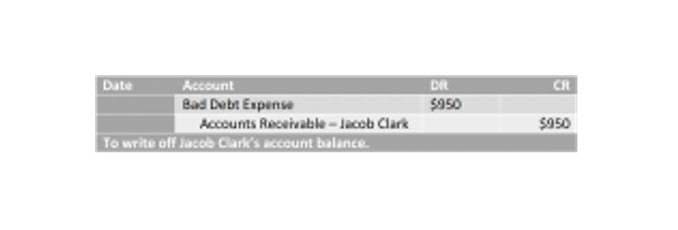
Adjusting entries for deferrals is important because they ensure that deferred revenue or expenses are recognized appropriately and accurately. However, if the customer later pays the debt, the journal entry will be a debit to the allowance for doubtful accounts and a credit to the accounts receivable account. To adhere to these requirements and guarantee that financial statements are prepared in accordance with GAAP or IFRS, adjusting entries are required. Adjusting entries can also be made using accounting software; this can help you streamline your accounting process. The term prepaid expense is sometimes replaced with the term deferred expense. By applying the accrual-based accounting method, entities ensure transactions are accounted for in the correct accounting period.
What are Adjusting Journal Entries (AJE)?
He has been a manager and an auditor with Deloitte, a big 4 accountancy firm, and holds a degree from Loughborough University. Both principles are important to review when discussing adjusting entries. Adjusting entries is necessary because trial balances may not be up-to-date and complete.
For depreciation, the adjusting entries are a little bit different than with other accounts. Accumulated depreciation which is a contra-asset account is put into consideration and is used to track depreciation expenses. When accounting for depreciable assets, you make an adjusting entry which is a debit to the depreciation expense account and credit accumulated depreciation. Some cash expenditures are made to obtain benefits for more than one accounting period. Examples of such expenditures include advance payment of rent or insurance, purchase of office supplies, purchase of an office equipment or another asset. These are recorded by debiting an appropriate asset (such as prepaid rent, prepaid insurance, office supplies, office equipment etc.) and crediting cash account.
After you prepare your initial trial balance, you can prepare and post your adjusting entries, later running an adjusted trial balance after the journal entries have been posted to your general ledger. The purpose of adjusting entries is to ensure that your financial statements will reflect accurate data. This is posted to the Unearned Revenue T-account on the debit side (left side). You will notice there is already a credit balance in this account from the January 9 customer payment.
Comments are closed.